Showing posts with label project moses. Show all posts

Wednesday, 3 October 2012

Five Thrilling Finalists - One Worthy Winner

I have to admit my heart sank and I was more than disappointed. Of course I would be. My book Chasing Innocence was in the final five for Best Indie Thriller 2012, and it wasn't me or my book they called out when they announced the winner.

I'm almost over it. It's been a month since Kirkus, Stephen, Rob, Craig and I were announced as the finalists. We were brought together by the promotional whirlwind that is Melissa Foster and I have to say the Google+ video chats I had with all of them were great for the soul. Talking to like minded writers will have that effect. The interviews they each did for me and this site were insightful and interesting.

The name they did call out and the winner of 2012's Best Indie Thriller was Craig O. Thompson's Omar. Listening to Craig describe the journey he undertook in writing the book and getting it published was remarkable in itself. I would highly recommend you check out the interview he did for me and then discover more about this incredibly accomplished man.

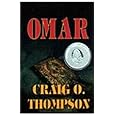
Omar itself is a rollercoaster of a novel that tracks the world's leading marine archaeologist as he attempts to save the Titanic's last undiscovered treasure: The Omar, from a french treasure hunter and an Islamic terrorist. The story not only follows the hunt for the Omar - a priceless book, but its journey from creation to the bottom of the ocean in the early 1900s. Written very much in the style of Wilbur Smith, Clive Cussler and for me Tom Clancy, the intellectual and moral hero sometimes also put me in mind of Dan Brown's main protagonist, although Craig's is somewhat more physically accomplished than Robert Langdon.

Omar will be a great addition to your Kindle or bookshelves and I have to agree, a very worthy holder of 2012's title for Best Indie Thriller. My heartfelt congratulations Craig. I'm looking forward to the movie and your audio commentary on Blu-ray.

Amazon US
Amazon UK
Craig O. Thompson

The Interviews

Creative Crow: Five Thrilling Finalists - Kirkus MacGowan
Creative Crow: Five Thrilling Finalists - Craig O. Thompson
Creative Crow: Five Thrilling Finalists - Stephen Woodfin
Creative Crow: Five Thrilling Finalists - Robert B. Lowe

Sunday, 16 September 2012

Five Thrilling Finalists - Kirkus MacGowan

This is the final in a series of incredibly interesting interviews with the other four Best Indie Thriller 2012 finalists. Each author details their journey, answering the same set of questions. We have so far met Rob Lowe, Stephen Woodfin, Craig O. Thompson and today I'm pleased to introduce Kirkus MacGowan.

Profile

Kirkus MacGowan
Kirkus MacGowan wrote his first book at the age of eight, about traveling to Mars to find the cure for cancer. He put his writing dreams on hold for twenty-five years and focused his energies on playing baseball. He moved on when he found playing softball with his friends more enjoyable than his pipe dream.

Since then, he graduated with a B.S. in Psychology, married a woman too good to be true, and moved back to his hometown. He gave up an amazing career waiting tables and now stays at home with his two crazy children. He spends his time writing thrillers and fantasy, playing softball with friends, enjoying the occasional computer game, and wrestling with his kids.

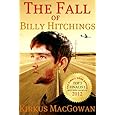
The Fall of Billy Hitchings

John Reeves, an ex-Marine, drives to Myrtle Beach hoping to repair a damaged relationship with his fiancée. Instead, he finds her unconscious in the hospital, the victim of an unexplained explosion at a local restaurant.

Reeves meets Billy Hitchings, a teenager who knows more about the explosion than he should. Their questions lead to an ancient legacy best left alone.

Pulled into yet another crossfire, John Reeves fights to protect his friends and keep a primeval power from falling into the wrong hands.

JP: You wrote a book. You published it yourself and hoped others would love it in some way, as you do. You read in the press over 250,000 books were independently published in the last year. Then you get an email from Jeff Bennington, founder of the Kindle Book Review - you made the final five for their best Thriller, Mystery books of 2012. Now tell me:

Just how did that feel?

Surreal is the word of the week. We have all these dreams and aspirations when we set out to become the next big author. We talk about what we’ll buy when we’ve sold a million copies, how we’ll star in our own movies.

The reality is that none of this is likely to happen, but we still have our hopes. To hear something like this from Jeff Bennington is a great form of validation. What makes it better is that the competition is reader based. It’s not about how many friends we have, how big of a bankroll we have behind us, it’s simply how much these avid readers enjoy our book.

We have proof that writing is important to you, tell us what moved you to write in the first place and then how that became writing a book.

I had an obsession with books as a child (and still today). It didn’t matter if it was a picture book, if it had words, I loved it. I’m betting psychologists would have a field day with this one, but I read phone books too. I don’t know if it was the funny names, or just the written language, but I’d spend hours in front of those huge yellow tomes.

When I was around age eight, my mother bought a typewriter for work. I was in shock. I couldn’t believe this little machine produced the very words pored over every night. I spent weeks copying books into typewritten form.

This is also about the time I fell in love with baseball. Without going into too much detail, I spent twenty-three years chasing the baseball dream before coming full circle.

Writing a book was something I’d always wanted to do. I’d graduated from college two years ago, had my two-year-old son rolling around on the floor in front of me, and felt ambition knocking at my door. I chose to write a book to show my son that it’s okay to chase dreams, that even if I don’t succeed, he can chase his as responsibly as I have my own and never question whether he made the right choice.

In crafting this story and the characters, what part of you is reflected in the story creation and these so real fictional people.

I’m assuming there are bits and pieces of my personality strewn throughout the story, but it’s hard determining whether they are pieces of me, or piece of all of us.

Like Billy Hitchings, for example. He’s your everyday nineteen-year-old kid. He has no idea what he wants to do with his life, he hates his horrible job, and he just wants more. This relates to what I said before about my dreams as a writer. I knew I wanted more out of my life, it just took me years to figure out what it was I wanted.

John Reeves has a tendency toward snarky comments and being flip at the most inopportune times, especially when put in situations he can’t control. I grew up in a “snarky comment” household, not just my immediate family, but extended as well. You couldn’t keep up if you didn’t have quick wits.

Then we have Amfar Ditpra, the (partially) insecure brainiac. He has many of the same doubts most men have, particularly with women. If anything, he symbolizes the brainy part of my personality. To this day, when I find a subject I find interesting, I’ll spend hours and hours researching only to satisfy my curiosity. This happened during my research for my second book. I searched for court cases where DNA evidence played a significant role and I didn’t log of the internet until almost four in the morning!

How long did it take to write this book? From page one to pressing “publish” on Amazon? Tell us a little about the process.

I wrote around 50k words in six months. It was also during that time that I learned about writing through a combination of writing itself and multiple how-to books.

I end up mentioning this in almost every interview I’ve done, but this was around the time I heard one of the best pieces of writing advice to date. I found an interview of Alexander Yates, author of Moondogs, where he described his writing process. His suggestion was that we should put the first draft down without ever going back for edits until the manuscript is complete. Why should we spend hours rewriting and editing a chapter that may not end up in the final draft anyway!

I took his words to heart and got down to business. I wrote the next 80k words in a little over a month (plus 50k words in two other books). I’m glad I took his advice. By the final draft, I had removed almost 25k words from the beginning of my manuscript, and another 15k later. Imagine if I’d spent my precious time editing those chapters now lost to the Horrible Writing Graveyard.

The rest of the process was rather straightforward. Edits, more edits, more edits, and then more edits. Cover design, more edits, and finally published. From the moment I wrote the first words to the moment I pressed publish (on my dad’s birthday) took a total of eleven months.

Did you ever lobby agents, had you been published traditionally, and what did you learn from this if you did?

As I mentioned above, I spent around six months studying the craft while putting down the first 50k words in my draft. I also learned about agents, traditional and self-publishing, editors, and just about every other aspect of the literary field.

I had everything lined up. I knew which agents I would query first, which publishers I hoped to sign with, how I would go about the process. Then… skip to the next question.

At what point did you think: 'I could publish this myself?' And what made you do this?

During my learning process, I found a book by J. A. Konrath named, The Newbie’s Guide to Publishing. I’d heard a bit about self-publishing, but nothing concrete. Konrath published traditionally for years before jumping into the Indie author field. I thought he’d have a unique perspective on the subject, and boy did he ever.

His book (a blog compilation) pointed me toward Indie publishing and I never looked back. He explained how newbie authors receive very little in the way of promotion unless they happen to be one of the lucky few. On top of this, they’re lucky to receive two dollars on a ten-dollar print book, or twenty-five dollar hardcover. Self-publishers receive the same royalties on a $2.99 eBook!

I figured that if I was going to promote myself more than a traditional publisher anyway, I may as well self-publish, promote the same as I would anyway, and receive a much higher royalty rate.

I’d still sign (probably) a print contract if offered, but with the recent explosion in eBook sales, no way I’m giving those rights away!

Once you made the leap, what drove you to produce a book of this quality? Tell me about typos, grammar, synopsis and the book's cover.

Luck? Seriously, it’s probably my perfectionist personality type. The problem is that none of this comes naturally. I worked my butt off! Of course, working hard doesn’t constitute quality, but I continued working until it was as good as I could possibly make it.

Looking at it now, there are plenty of changes that could improve my debut novel. That’s part of the process. If you can’t look back at your past works and see things you need to change, then you aren’t growing as an author.

On top of this, I’d read so many horror stories about bad formatting, editing, and plotting, that I didn’t want to be one of those stories. Like the old-school attitude states, if I’m going to do something, I’m going to do it well… at least the best I can at that given time.

As with all aspects of book creation, the book cover took multiple drafts before I was satisfied. I went through one professional, created a cover myself, and then went on to another professional before I was satisfied.

Remember that perfectionist attitude? There’s always the possibility I’ll change the cover again. It’s hard for me to leave something alone if it’s not perfect. An entire rewrite isn’t out of the realm of possibility either.

Do you publish outside of Amazon and what are your thoughts on the Amazon Select program?

The novel we’re discussing today, The Fall of Billy Hitchings, is only available through Amazon in eBook format, but through multiple retailers in print. I originally started my novel on multiple online retailers but that quickly changed when the KDP Select program began.

I could go on about KDP Select for hours so I’ll try to keep this short. When I saw the success other authors were having by joining the program, I jumped on the wagon.

The Fall of Billy Hitchings has had amazing success. I’ve run a few freebie days on Amazon and given away around 40k copies. In the long run, those giveaways will hopefully bring readers around to check out my other books, and maybe bring in some reviews, but the best part is the effect on your sales afterward.

One of the ways Amazon promotes your book is through its popularity. That popularity is a combination of multiple factors and one of those factors is how many copies you give away on a free day.

Okay, I’m already rambling. KDP Select is great for Indie authors, at least for now, but we have yet to see the long-term ramifications.

A journey that started a long time ago has led you to these characters and this book. You're already a finalist. Tell me what it would mean to have your book named as the Kindle Book Review's Best Indie Thriller 2012?

Regardless of who wins, this has been a wonderful ride and I’ve met some cool authors along the way. I’m just happy there are readers out there who enjoy my books.

If I win, then I look forward to working with The Kindle Book Review to get the word out about my debut novel. After I do a happy dance of course. I honestly can’t give a straight answer. I can’t imagine winning, just as I didn’t imagine making it to the top five in my genre.

Every validation along the way feels better than the last. I’m honestly just happy doing what I love. If winning means I get to spend more time writing (and my family), then I’ll be ecstatic.

Before I go, I want to give a shout out to John Potter for allowing me the opportunity to interview on his blog. I also need to say thanks to Jeff Bennington for this creating a wonderful website dedicated to the support of Indie authors.

Thank you so much, for this interview.

It has been a real pleasure Kirkus. I loved the Alexander Yates advice. Thank you for taking the time.
Omar on Amazon UK


Join Kirkus and 9 other award-winning authors in the BEST INDIE BOOK FESTIVAL,
Featuring 10 Literary Fiction & Thriller Titles!
TWO DAYS ONLY!
Tues. Sept. 18-Wed., Sept. 19th.
10 Award winning books and SEVERAL chances to win a
$10, $20, or $50 Amazon gift card 
(3 lucky WINNERS will be chosen!)


Friday, 14 September 2012

Five Thrilling Finalists - Craig O. Thompson

This is the third in a series of interviews with the other four Best Indie Thriller of 2012 finalists. Each were sent the same questions, each in their answers detail their journey. On Monday we met Rob Lowe, Wednesday it was Stephen Woodfin and today I'm pleased to introduce the formidably accomplished Craig O. Thompson.


Profile

Craig O. Thompson
Craig was the first 18-year old volunteer to be accepted into the U.S. Peace Corps and serve overseas. He graduated out of Northern Arizona University and holds a B.S. and M.A. in Education, with a Minor in Political Science. He is a highly regarded anti-terrorism expert and counter-terrorism consultant, Talk-Show Guest and President of Brightwater Enterprises. Craig has been writing for nearly twenty-five years with some of his major fiction influences listed as Tom Clancy’s earlier novels and Clive Cussler’s Dirk Pitt series. Craig's first published book has already claimed the International Benjamin Franklin Silver Award for Best New Fiction Voice.

Omar

In 1995, CIA/FBI jointly discover secret plans to recover a trove of priceless treasure from deep below the North Atlantic Ice Barrier, aboard RMS Titanic. An ultra-zealous terrorist group competes against other divers, and sets off a complex web of international intrigue and suspense. CIA's Colonel Bramson recruits Dr. Cary Parker, Woods Hole oceanographer / archaeologist, to beat both teams to the ship's grave. And a wave of worldwide terrorism is set into motion at 2077 fathoms, as a rare, priceless book and lost treasure becomes the primary focus of a triadic search. Parker, challenges the terrorists on his own turf, and what follows is an epic adventure of legendary proportions.

JP: You wrote a book. You published it yourself and hoped others would love it in some way, as you do. You read in the press over 250,000 books were independently published in the last year. Then you get an email from Jeff Bennington, founder of the Kindle Book Review - you made the final five for their best Thriller, Mystery books of 2012. Now tell me:

Just how did that feel?

Quite honestly… I felt shocked, but exonerated from the self-doubt that plagues many authors, myself included. There I was, among so many outstanding, accomplished authors who were listed as Thriller/Mystery Semi-finalists (an award in itself).  So, I attempted to put any chance of reaching the Finalist’s level out of my mind.  When the announcement came, there was joy and relief.  Relief brought about by the realization those years of research, lonely toiling at the computer, rejection slips and a decade pushed aside by everyday responsibilities, following 9/11, were not in vain.

We have proof that writing is important to you, tell us what moved you to write in the first place and then how that became writing a book.

Most of my professional positions have involved some type of writing for marketing, promoting and publicizing services or products (from education to the arts to merchandizing).   However, as a young adult, I wrote poetic and lyrical pieces that—for-years, out of a lack of confidence—I never shared.  For me, it was a cathartic escape.  Yet, over time, four persons inspired me to become an author.

First, my mother awakened an interest in writing as she created a series of books tracing the history of Father Junipero Serra’s establishment of church missions, in California (she was not a Catholic).  From her works, a travelling pageant produced by the State of California, was created to celebrate its Bicentennial.
Second, was Lucille Ball, for whom I wrote a series script, while working at Desilu/Paramount Television.  She personally reviewed the script… told me it was not a good script, but wrote a note that encouraged me not to give up writing.

Two others gave me a tremendous boost in confidence.  World-acclaimed pianist, Roger Williams, and Poet Laureate / Pulitzer Prize winner, Gwendolyn Brooks not only took a liking to my poetry, but wrote notes of encouragement.  Both provided critical comments about specific pieces, as well.

Persistence—and a developing awareness that terrorism of the 80’s and 90’s had morphed into an insidious asymmetric horror, that our world would know after the turn of the century—pushed me to get more serious about my writings.  I was fortunate to find and angel and an investor, both of whom allowed me to write for a time, without worrying about “from where the money would come” to feed my family.  And my book – originally slated in my mind to be the “great American novel” – soon became a warning of what was to come.

In crafting this story and the characters, what part of you is reflected in the story creation and these so real fictional people.

I was fortunate, as the first and youngest American Peace Corps volunteer (inducted at age 18), to be able to travel and experience many of the realities of the world.  This was during the very early days of what led up to Vietnam and the resulting world and national conflicts that blossomed after.  Following graduation from Northern Arizona University, I worked at the secondary and collegiate levels of education (both in the classroom and at administrative and board levels).   Having been an owner of two successful companies, over the years, my business sense aided in creating characters that reflect similar traits needed in their own fictional settings.  As many authors employ aspects of their own lives, and project them into characters, I’ve been no different.  Writer’s empathy is the key. The fun part: I could take a true-to-life nemesis, from my past, and turn him or her into an antagonist.

How long did it take to write this book? From page one to pressing publish on Amazon? Tell us a little about the process.

In my youth, I grew up watching my best friend’s father peck away on an old Royal typewriter, as he wrote Dean Martin and Jerry Lewis screenplays, among others.  If you picture, in your mind, any writer ripping a page he didn’t like from his typewriter platen (the roller)… crunching it up and throwing it on the floor—that was Mr. King.  My dilemma:  I knew I would never have the patience to write like that. I bought my own self-correcting IBMs, to no avail.  Just had no tolerance for typing one-hundred percent of a scene or chapter, all over again. Thank God for the computer – with cut-and-paste.  When I bought my first Apple in 1984, a IIC with the giant 5 inch discs, it was the most liberating experience of my life.  Soon after my purchase, I took the computer (and my family) on vacation to my aunt’s beach house in North Carolina.  Early mornings, while family slept, I banged out plot ideas, character histories and other plot devices for OMAR: A Novel.  But as many independent authors know, life gets in the way of writing, if we let it.  And I was no exception.  It took me until 1997 before a Limited Edition was published.  Then, the First Edition hit in August, 2001.  Eleven years later… the revised Digital E-book hit the stands.

Did you ever lobby agents, had you been published traditionally, and what did you learn from this if you did?

Like many authors, I first chose the traditional route to find an agent.  A hundred or so query letters, synopsis… and rejection letters later, I continued to pursue the normal channels.  Basically, I followed the rules of the game – as suggested by all the” proper authorities” in the Guide to Literary Agents, Writer’s Digest, the various Writer’s Marketplace sourcebooks, etc.

In 1994-95 I sat on the board of Washington Independent Writers (now The American Independent Writers).  At the time, I was encouraged to submit OMAR: A Novel (then under a different working title), to an international literary agent/attorney based in DC.  I had received impressive notices from several people who worked at or had retired from high levels within the Big-6 publishing industry.

I must admit the book needed tremendous paring down (from a James Michenor-type 900 pages to the current 624).  To achieve that end, a journalist who had retired from Pulliam Newspapers performed a third-draft edit. And the fourth-draft was edited by another retired friend, who had provided services for the Big-6—and who was James Clavell’s editor for “Shogun”—a novel, described at the time, as one “not far off perfection.”

Several meetings with my literary agent, over the span of a year, and respectable and encouraging comments from the primary agency partner, kept me going.  In the final analysis, it was recommended I cut out everything but the “blood and guts”.  Since I was not willing to leave out what I felt were important literary aspects about the  RMS Titanic—and more specifically about the OMAR—as each related to my terrorist plotting, we could not come to an agreement.

At what point did you think: 'I could publish this myself?' And what made you do this?

Ultimately I learned that I had to go with my heart.  To avoid using a vanity press, I created my own publishing company in 1997.  With an investor to help fund the start-up, we published a limited hard and soft cover test-market edition in 1999; revised it; then published formal 1st Editions in August 2001 – a month prior to the Attack on America.

C-SPAN taped my first introductory keynote speech, in Washington DC, where I premiered OMAR: A Novel and spoke about Osama bin Laden, suicide bombers, poor airport security, and of coming attacks on our homeland, where thousands might be killed.  Ironically, my August 9th 2001 speech was broadcast on August 11—exactly one month to the day prior to the Attack.

OMAR: A Novel had already received attention from a number of regional and national radio interviews I booked, in advance, with the help of Radio – Television Interview Report (RTIR).  But, following 9/11—though I had back-cover comments from a U.S. Senator who stated “…. This well-researched fiction is a timely window into potential disasters for unprepared nations.” and from the former chairman of the Joint Chiefs of Staff, who in a letter dated September 7, 2001 (four days prior to 9/11), said, “…."Given the terrorist threats both to our homeland and to our citizens abroad...this deep ocean adventure thriller could not be more timely"… book sales stopped.

Ironically, I was known as an “expert on terrorism” and became a regular talk-show guest on show’s around the globe.  Unfortunately, I had also received subtle threats from a few listeners who suggested my publishing company was attempting to make money off the victims of 9/11.  Though my book had been out long before the event, and the Big-6 publishers continued to push Tom Clancy’s and related novels extra hard, it was difficult to publicize OMAR: A Novel without stirring up controversy… as I was the new kid on the block.
The good side:  I became communications director for the International Association for Counterterrorism and Security Professionals; my speaking engagements picked up; and back-of-room book sales picked up with it.  Clients began to call me… some even from just hearing me on the radio.  And it began a nearly 10-year unintentional diversion from writing, as consulting took up nearly all my time.

In 2011, I began to slow down client work and reconsidered the e-publishing route.  The e-book stats were impressive.  Impressive enough to push me back into editing and reformatting OMAR: A Novel, on my own.  With help from some great people on the Kindle Discussion boards, I eventually got the format down; pushed the publish button; and voilĂĄ!

Once you made the leap, what drove you to produce a book of this quality? Tell me about typos, grammar, synopsis and the book's cover.

I always felt bad, during personal editing of early drafts, that I had made so many misteaks (sic) ;)  It was usually OMG!  How could I have been so stupid to miss that one?  I used to really beat myself up.  After all, I had professors who would role over in their graves if they thought I had written anything! But following all the professional edits and final publication of the 1st Editions, I still said OMG!  How could all of us have missed these misteaks (sic).

The best part about all the time between editions… all that wonderful software came along to level the spelling and grammar field just a little bit more.  Nothing’s perfect.  I’ve learned to accept that.   I just continue to strive.

For the synopsis:  I can’t begin to tell you how many times I wrote, rewrote, then, rewrote again… and again.  It basically boiled down to what is called “The Elevator Speech”.  If OMAR could not be explained to someone, on an elevator, in just thirty seconds—it was too long. Oh, I did produce a very long Chapter-by-Chapter version (just to have one on hand).  But the synopsis has been honed down to a short version and a very short version (for specifically short character/word requirements on e-forms).

The cover:  Well, I was very fortunate to meet a professional graphic artist who, for a very reasonable fee, took my concept of the actual Omar illuminated binding sitting on the bottom of the cold North Atlantic—and ran with it.  After Mark Victor Hansen, co-author of the “Chicken Soup” series, praised my cover at the Chicago BookExpo, I felt I had come a long way. The only regret, for the cover text, is that it does not say “A Novel” on the front (where a potential reader might think it is non-fiction).  That is why we changed the title page, in 2001, to read OMAR: A Novel… and why we emphasize it at every turn, for promotional purposes.

Do you publish outside of Amazon and what are your thoughts on the Amazon select program?

I have not yet published outside of Amazon, though I had begun the process with Smashwords, B&N and iTunes.  It’s really a question of having the time or, perhaps, paying someone else to reformat and do it for me.  There just has not been enough time in my day to accomplish this.
Regarding Amazon Select:  With a publish date of January 20, 2012, I chose the program for the first 90 days, to see what type of response it would garner.  Under an “Introductory Price” of $3.99, the sales were respectable whenever I spent a huge amount of time on Meet Our Author boards.  The question then became “How much momentum would there be if I didn’t spend as much time in the MOAs?”  I experimented and it seemed to remain steady.

However, after watching the overall numbers for the Select program, I decided to conclude it at 90 days.  Select loans never reached very high, for me.  It may be the nature of my book.  But it worked out, as the introductory price ended and the $5.99 regular price began.  Readers who invest in OMAR: A Novel seem to be secure in their knowledge that they will get their money’s worth.  And I believe that most, who pick up OMAR: A Novel, will eventually read it.

A journey that started a long time ago has led you to these characters and this book. You're already a finalist, tell me what it would mean to have your book named as the Kindle Book Review's Best Indie Thriller 2012?

I have a great deal of respect for any author who takes the time to research and write a story that “grabs the reader from the first sentence,” then makes them hold on for the duration.  That is the nature of the company I’ve been honored to keep—with other members of the Top 5 Thriller Finalists.

To be named as a Kindle Book Review Top 5 Finalist is an honor in itself.  To receive the top honor, as Best Indie Thriller 2012, would be a privilege not taken lightly.  In my mind, it would become a tribute to those innocents lost aboard the Titanic—about whom I have written from a different perspective.
I truly appreciate the time you gave me for this interview.

JP: It's been so interesting, thank you. 

Omar on Amazon UK


Join this awesome author and 9 other award-winning authors in the BEST INDIE BOOK FESTIVAL,
Featuring 10 Literary Fiction & Thriller Titles!
TWO DAYS ONLY!
Tues. Sept. 18-Wed., Sept. 19th.
10 Award winning books and SEVERAL chances to win a
$10, $20, or $50 Amazon gift card 
(3 lucky WINNERS will be chosen!)


World Literary Cafe- Best Indie Book


Wednesday, 12 September 2012

Five Thrilling Finalists - Stephen Woodfin

There are five finalists for the Kindle Book Review's Indie Thriller of 2012. I'm one of them and thought it'd be fun to ask the others a set of questions about their journey. I'm pleased to say they each agreed. On Monday we saw Rob Lowe's answers, today it's Stephen Woodfin.

Author Profile

Stephen Woodfin
Stephen has a BA in religion, is a Master of Divinity and has received the Cullen Midler Award in Theology. He took his law degree in 1985 and has practiced law continuously for the last 25 years, serving as class counsel in national cases that included millions of people. He is the author of five fast-paced legal thrillers, and hopes these books will not debunk the myth that he actually knows something about the law.

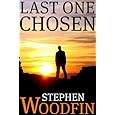
The Last One Chosen

Homeland Security agents raid a small East Texas town and arrest a humble blue-collar worker for domestic terrorism and espionage. When two country lawyers take on his defense and fight to prevent their client's execution, they learn he holds the secret of a doomsday device, a secret he will not divulge, even when tortured. As the trial reaches its astonishing conclusion, the two lawyers realize their struggle has not only been about justice, but also redemption.

Interview

JP: You wrote a book. You published it yourself and hoped others would love it in same way, as you do. You read in the press over 250,000 books were independently published in the last year. Then you get an email from Jeff Bennington, founder of the Kindle Book Review - you made the final five for their best Thriller, Mystery books of 2012. Now tell me:

Just how did that feel?

It made me feel great, but not because I think of writing as a competition with others authors. I don’t.  I believe we are all in this together, trying to do the best job of writing we can on the project at hand, and pulling together for all authors to help them succeed.  I was thrilled to become a finalist because authors live year in and year out dealing with rejection, yet plugging ahead.  Every now and then, it’s nice when someone throws us a bone.

We have proof that writing is important to you, tell us what moved you to write in the first place and then how that became writing a book.

I suppose I have always sought refuge in writing. I can look at my bookshelf and see scraps of pieces I have put together at almost every stage of my life. About 8 or 10 years ago, I decided I was not getting any younger, so I started attended writing conferences, writing short stories and studying the craft of writing.  I had worked on several novels, re-writing the first fifty pages or so.  Finally I hired a professional writing coach, the great author Jory Sherman.  Jory told me that everything I needed to write a book was already within me.  Somehow that notion took root in me, and I finished my first novel, Last One Chosen.

In crafting this story and the characters, what part of you is reflected in the story creation and these so real fictional people.

I write legal thrillers, and I am a lawyer by trade.  So, it is really impossible for me to separate myself from the attorney characters in the book.  The courtroom drama is more or less a distilled form of the sorts of things I have seen play out in real life.  By this I don’t mean that I have patterned any of my books around actual cases.  But I believe it is important to get the details right about courtroom procedure in order to lend a layer of realism to the story.

As to Last One Chosen itself, I had thought about the basic theme of the book for years. My undergraduate and graduate training are in religion, and this caused me to consider a story of the one true person who maintains his integrity in the face of the brute force of government.  It is really a parable about the undying power of love and loyalty in the face of hatred and betrayal.

How long did it take to write Last One Chosen? From page one to pressing “publish” on Amazon? Tell us a little about the process.

I piddled with the first fifty pages or so for quite a while.  But then when I hired my writing coach as I described above, I got on a roll and wrote the last three hundred pages in about three months or so.  After that, I did revisions, formatting, etc., which took another couple of months.

Did you ever lobby agents, had you been published traditionally, and what did you learn from this if you did?

I obtained an agent shortly after I completed the manuscript of Last One Chosen. As I continued to write, I submitted two more manuscripts to her and she presented these to a total of four major New York houses.  I waited for close to two years for some word from these publishers.  I never received anything, no rejections, no response, no nothing.

What I learned from this was that I didn’t have the time to wait for years to find out if my book was going to be published.  I decided to take a different route.

At what point did you think: 'I could publish this myself?' And what made you do it?

I sort of backed into this.  While my agent had my books under submission to the major houses, I was growing more and more impatient with the traditional publishing model.  Through a stroke of good luck, I came in contact with the fine writer, Caleb Pirtle.  Caleb and I decided to form a small press, not to publish our own stuff, but to publish the work of other independent writers.  Over the course of a few months, we realized that it also made sense to include our own works in the process.  I had written my fourth novel by then, so it was actually the first of my books to see the light of day.  That novel now exists under the title of The Warrior With Alzheimers: The Battle for Justice.  It was a real labor of love for me.

Once you made the leap, what drove you to produce a book of this quality? Tell me about typos, grammar, synopsis and the book's cover.

I have always been a believer in craft and attention to detail.  Some of that may come from years of practicing law.  Regardless, I never want to release something unless I believe it is as good as I can make it. Last One Chosen went through several important phases. As I wrote it, my coach read it and made suggestions about how I could improve the story. After it was finished, I went through the editing process of cleaning it up.  Then, when my agent reviewed it, she made a few suggestions. When I decided to publish it myself, Caleb and his wife Linda edited it again and helped me refine it even more.  Caleb is a fine editor and a person whose judgment I trust.

I used a cover artist that Caleb has worked with for years.

Do you publish outside of Amazon and what are your thoughts on the Amazon Select program?

Originally, I published through a distributor who put my titles up in all major etailers.  However, over time, I decided that Amazon is where the action is in the ebook business, and I decided to go all in with KDP Select.  This cut out one middle man and gave me a sense of greater control over my books. I find that the “borrows” I receive through the Select program account for more revenue than the sales I give up on the other sites by becoming exclusive to Amazon.

I am not sure how the free days will work out ultimately.  I believe they are just a step along the way that may or may not last as part of the ebook business.  But, I still think Amazon is the place to be.  Most readers who use ereaders other than the Kindle (such as the iPad) still use the Kindle app to buy books.
If a writer can reach a sales ranking where Amazon’s algorithms kick in for him, he can sell a lot of books while Amazon drives his marketing.

The one thing I think I can say for sure about the current ebook climate is that the best thing for a writer is to have multiple titles available.  And he needs to keep writing and keep building his inventory of books.  If one title gets hot, his other titles will reap the benefit.  I think the toughest situation is the one where a writer has only one book.  This limits his opportunities to find a broader readership.

A journey that started a long time ago has led you to these characters and this book. You're already a finalist. Tell me what it would mean to have your book named as the Kindle Book Review's Best Indie Thriller 2012?

It would be an absolute hoot. I think it would lend a level of credibility to my writing, something like a seal of approval.  As far as its impact on my writing career, I am uncertain.  I certainly don’t believe that it would catapult my book to the top of the rankings, but it sure wouldn’t hurt.

The way I see Kindle Book Review’s Best Indie Books of 2012 Awards, they are a way to showcase the talent of indie writers and to give readers a chance to find some good books by authors that aren’t household names, yet. This is good for indie writers, but more than that it is good for readers.  They get inexpensive, well-written books and for the most part access to the authors themselves.  It’s a great deal all the way around.

Finally, I want to thank Jeff Bennington for having the vision to put these awards together.  He is a real pioneer in the world of digital publishing and a great friend to indie writers.

Thank you so much, for this interview.

JP: My pleasure Stephen, it has been so interesting talking to each of you.

Last One Chosen on Amazon UK


Join this awesome author and 9 other award-winning authors in the BEST INDIE BOOK FESTIVAL,
Featuring 10 Literary Fiction & Thriller Titles!
TWO DAYS ONLY!
Tues. Sept. 18-Wed., Sept. 19th.
10 Award winning books and SEVERAL chances to win a
$10, $20, or $50 Amazon gift card 
(3 lucky WINNERS will be chosen!)


World Literary Cafe- Best Indie Book

Monday, 10 September 2012

Five Thrilling Finalists - Robert B. Lowe

Robert B. Lowe is one of five finalists for the Kindle Book Review's Indie Thriller of 2012. Here's a little insight into what brought him and Project Moses to this point.

Robert B. Lowe

Author Profile

Robert B. Lowe has adopted San Francisco as his home and sets his fiction there too. He has a Harvard Law school degree and spent twelve years in investigative journalism - earning himself the Pulitzer prize along the way. He draws his fictional inspiration from John Grisham, Dick Francis and Lee Child, blending his own style with a mix of Bay landmarks and culture. When he isn't writing he enjoys a day at the golf course and spending time with his wife and daughters.

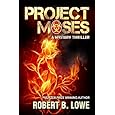
Project Moses

A very good book
Enzo Lee is burned out. He's swapped out the east coast and a life at the cutting edge of investigative journalism, for anonymity and the quiet life writing fluff features for a Bay newspaper. Life is good. He runs, revels in his Chinatown roots and alternatives between Tai Chi and women drawn to his exotic looks.

His quiet life ends when he's the only reporter on the desk when a local prosecutor and then judge die. He is pulled into the case by his instincts for a good story and the judge's attractive niece: Sarah Armstrong. Quickly uncovering evidence of bioterrorism that local government officials and silicon valley titans will kill to keep concealed. When Lee and Sarah become targets themselves, it becomes a countdown to whether they can uncover the truth before their time runs out.

Interview


JP: You wrote a book. You published it yourself and hoped others would love it in some way, as you do. You read in the press over 250,000 books were independently published in the last year. Then you get an email from Jeff Bennington, founder of the Kindle Book Review - you made the final five for their best Indie Thriller, Mystery books of 2012. Now tell me:

Just how did that feel?

Yippee!  Hoorayy!  Whoop!  Whoop! Whoop!   Seriously, I was pretty happy.  It’s tough even when you start getting some readers and are getting nice reviews to feel you are making any giant strides toward becoming a “successful” writer, as in someone making a serious part of their living at it.  So, it felt nice from both pure ego/vindication to get selected but also to feel like it’s a nice step in achieving your goal.

We have proof that writing is important to you, tell us what moved you to write in the first place and then how that became writing a book.

Having been a journalist for 12 years, I was able to write professionally and always enjoyed the process.   There is always the draw and challenge of a book, though.  I knew many co-workers working on books – some were very successful and others less so.  So, part of me wanted to try my hand at it.  Also, I’ve always been an avid reader of mysteries, particularly those with suspense.  Wanting to emulate the examples you admire and wanting to fix the ones that were flawed entered into it as well.

In crafting this story and the characters, what part of you is reflected in the story creation and these so real fictional people. 

I’ve been a reporter and a lawyer.  I’ve also spent enough time in board rooms with high-powered corporate types and seen a lot of the business politics and uses of power in that context.  I borrowed all that in creating the people and situations.  Since the main protagonist is a reporter and the path followed is generally his, I relied a lot on thinking of what I would have done and felt in his place.  Often I didn’t know in advance what the next steps would be.  I left the character with the problems and then put my reporter’s  hat on to figure out the next steps.

How long did it take to write this book? From page one to pressing publish on Amazon? Tell us a little about the process.

It took me 18 years.  I wrote a first draft in 1994 when I had 3 months off between jobs.  I put it down and literally didn’t look at it for 15 years while I had a couple of careers, raised young kids, etc.  Then, I found myself with time again late in 2011.  My wife had badgered me the whole time to finish it and get it published.  I learned about the whole phenomenon of Indie publishing and went for it.
Being able to reread your manuscript after 15 years was amazing.  I’d forgotten major parts of the story.  Some parts made me cringe and others made me quite happy.  It was a once-in-a-career luxury but it was very clear what needed fixing and I think the improvements were huge.

Did you ever lobby agents, had you been published traditionally, and what did you learn from this if you did?

I did make a run at finding an agent and publisher in 1994 but to no avail.   It convinced me I didn’t want to go that route.  I doubt that I would have gone back to finishing the book if not for the Indie route.  My view is that you have a choice of  two walls to beat your head against.  1) The hunt to find an agent/publisher.   2) The effort to self publish and try to get your book and yourself known.  They both are tough.  But, with the second at least you have a book out. You can get readers, show friends and family what you’ve done and move on to the next project.

At what point did you think: 'I could publish this myself?' And what made you do this?

The main ‘Aha’ moment was when I create a mobi file for the first time of part of a draft of Project Moses and it looked just like best sellers I’d been reading on my Kindle.  The field was leveled.  Then, it wasn’t so much that I had this whole strategy for publishing, marketing, getting sales, etc.  It was just “I can finish this book and have it out there looking as good as anything so-and-so has out.”  After that, it’s just been a series of “now whats,” taking the next step until now.    

Once you made the leap, what drove you to produce a book of this quality? Tell me about typos, grammar, synopsis and the book's cover.

Well, I did have 18 years to hone it so it should be pretty good.  Seriously, I was a working journalist for 12 years and my wife was one for about the same length of time.  She was an editor for much of that time and  edited a couple thousand articles before putting them into the newspaper.  Between the two of us – and feedback from some careful readers who reviewed it prepublication – we had it in pretty good shape.   (I’ll probably have a professional copy edit of the next one.)  As far as the synopsis, I just did the best I could and kept revising as I listed it in new places or had to provide descriptions to bloggers etc.  I also listened to how others described it – reviewers, bloggers, etc.   I did have someone help me with my website who gave me good advice on the entire publication process.  For the cover, I actually found the art – a flower in flames – while looking for ideas online.  I suggested it to a cover artist – a guy who does work for some more successful thriller indies – and he took it from there.  Cost was several hundred dollars but it was the difference between amateur and pro, I think.

Do you publish outside of Amazon and what are your thoughts on the Amazon select program?

I initially put it up everywhere.  After I had around 20 reviews on Amazon, I decided to try the select-free program.   I bought ads and let the availability of those drive the timing.  I did a lot of prep to be listed on the sites that list free books.  Many of them seem to automatically pick out the ones with high review scores – either automatically or someone uses that filter and hand selects from there.   I had a virtual tour going on around the free days.  Project Moses was #2 in the overall free Kindle listings the entire second free day of the two-day free period.   It reached  #109 overall  for paid Kindle three days after the Select free period finished because of the carry over in paid sales (priced at $0.99).   Of course it declined steadily from there but it was an amazing ride, I learned a lot, and I’m convinced it was a big step toward getting exposure for the book and my name.   On the other hand, I tried to take a second bite 60 days later and had nowhere near the response. Perhaps I just got lucky the first time. Or, maybe it was too quick to list again.  People/sites may have discounted it because they knew it wasn’t ‘new.’  So, it may have been a fluke and I can’t comment on how this all will turn out.  But, it worked out for me this time around.
    
A journey that started a long time ago has led you to these characters and this book. You're already a finalist, tell me what it would mean to have your book named as the Kindle Book Review's Best Indie Thriller 2012?

It would be amazing because I think it’s a very meaningful award.   You see some out there that seem rather obscure or more for making the organizers money with a price high enough to exclude many authors.  I think this is the real deal and the quality of finalists in all categories is apparent.   So, it would be a true honor.  And, of course, it would be a wonderful achievement upon which to keep building.

Thank you so much, for this interview.

My absolute pleasure. Best of luck Rob.


Join this awesome author and 9 other award-winning authors in the BEST INDIE BOOK FESTIVAL,
Featuring 10 Literary Fiction & Thriller Titles!
TWO DAYS ONLY!
Tues. Sept. 18-Wed., Sept. 19th.
10 Award winning books and SEVERAL chances to win a
$10, $20, or $50 Amazon gift card 
(3 lucky WINNERS will be chosen!)


World Literary Cafe- Best Indie Book


Sunday, 9 September 2012

Five Thrilling Finalists - Me!

IN 2002 I listened to Peter Jackson talk about how he made movies. I find it difficult to put into words how that impacted me. It certainly changed my life. I have always been creative and a forever daydreamer. I think if I'm honest I wanted to write something he might make into a film. This hope evolved in time to creating a book that would read like watching a movie. It hasn't been easy.

IN 2007 I had been writing for five years. I'd written quite a few short stories and blogged for all of that time. I was ready to write a book. But what about?

I think the concept for the first book is hardest to come by because you have no comprehension for what will make a book. In October of 2007 I saw a young girl who seemed to literally vanish from the high street. I was immediately conflicted by a compulsion to assume she would be fine and a moral need to do the right thing. I walked across the street and eventually found her stood outside a chemist. In that moment the idea for my first book was suddenly there. What if a young girl had been kidnapped and a woman witnessed the kidnapping. What if that woman had been a victim as a child?

I learned a LOT writing the first book. A LOT, because I made every mistake imaginable. After finishing the third draft I decided the biggest barrier to anyone reading my book was lobbying literary agents, so I decided to set-up my own publishing company. The goal was to provide high quality entertainment that equalled anything produced by a commercial publisher. I worked with a model, photographer, graphic artist, copy and proof editor to make that happen. I invested a lot of myself bringing it all together. I am very proud to say Chasing Innocence was published in both paperback and Kindle editions in the US and UK on January 17 2012.

One of the worst things about writing is wondering if the result of all the hard work and sweat isn't actually just a bit rubbish. It's very difficult to get honest reaction. One of the greatest moments was the first independent review by Sarah Burns of The Kindle Book Review (KBR). Sarah raved about Chasing Innocence and pointed me in the direction of KBR's Best Indie Book of 2012 competition. I entered thinking the worst would be it never got mentioned. On 1st July I got an email from KBR telling me I'd made their Semi-Finalist long-list. On September 1st the KBR founder Jeff Bennington emailed me to say I'd made the final five.

What does it mean? It's not about accolade or personal achievement, it's about feeling I must be doing something right. It gives me the self belief to continue pushing the boundaries of what I'm capable of doing and the boundaries of how a book can entertain human minds. The fact the KBR is primarily fan driven is key to this. It is VERY important to me.

There are of course four other KBR finalists who each have their own journeys to tell. I thought it would be fun to find out a little of their backgrounds and to ask them a few questions. They kindly agreed. Over the next week I'll be posting the interviews, here's the schedule. I hope you revisit and check them out.

Monday 10 September
Robert B. Lowe - Project Moses
US  UK

Wednesday 12 September
Stephen Woodfin - Last One Chosen
US  UK

Friday 15 September
Craig O. Thompson - OMAR
US  UK

Sunday 17 September
Kirkus MacGowan - The Fall of Billy Hitchings
US  UK

The Kindle Book Review announce the winner on 1 October.